
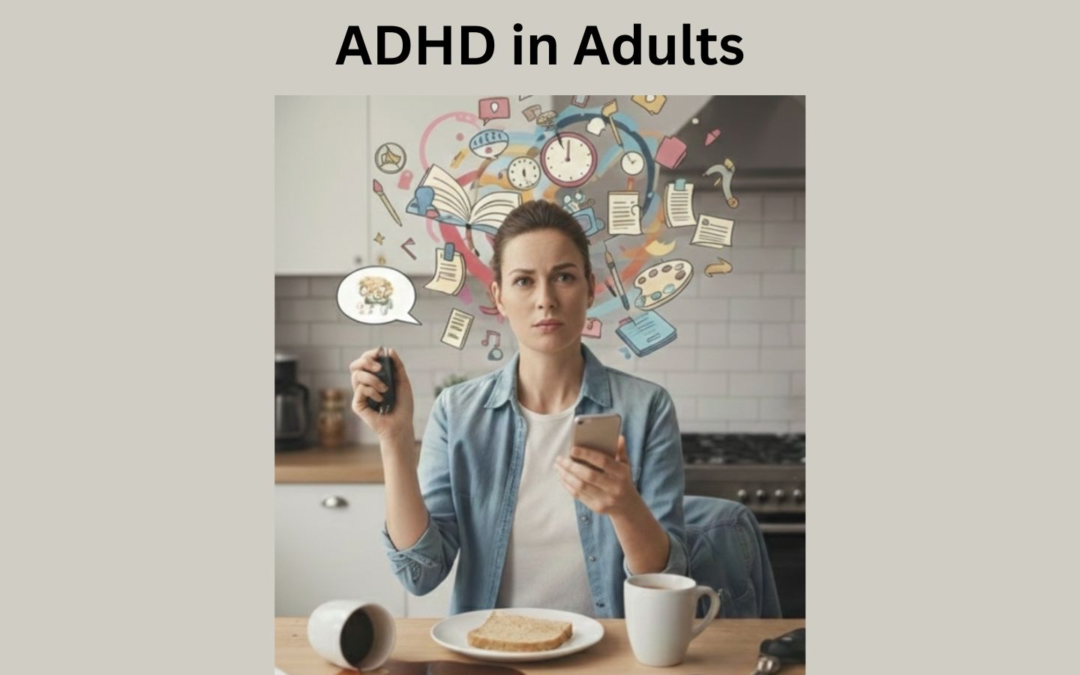
What Is ADHD? A Guide to ADHD in Adults
Attention-Deficit/Hyperactivity Disorder (ADHD) is a common form of neurodiversity. In medical terms it is a “neurodevelopmental” or “neurobehavioral” disorder that affects attention, impulsivity and executive function — the brain’s ability to plan, prioritize, regulate emotion, manage time, and follow through.
It is not laziness.
It is not a lack of intelligence.
It is not poor parenting.
ADHD is a lifelong difference in how the brain regulates attention, motivation, impulse control, and emotional response. Two biological mechanisms are implicated in the condition. The first is that of inconsistent dopamine production, the second is dysfunction in the frontal lobes of the brain.
As a developmental pediatrician, it was the most common diagnosis I gave and treated and as a coach I’ve worked with countless individuals navigating ADHD — from parents of children with ADHD to high-performing professionals who were diagnosed later in life. I find that understanding ADHD through a neuroscience lens changes everything.
Please note: This article is for informational use only. If you think someone might have ADHD, the first step is to talk with a healthcare provider.
ADHD in Children
The American Academy of Pediatrics explains “Attention-deficit/hyperactivity disorder (ADHD) is one of the most common neurobehavioral disorders of childhood and can profoundly affect children’s academic achievement, well-being, and social interactions.” The CDC estimates that 7 million (11.4%) U.S. children aged 3–17 years have been diagnosed with ADHD. Most of these children have at least 1 other condition (comorbidity) and 18% have 3 or more.
See my article on ADHD in Children for more information.
ADHD in Adults
ADHD frequently persists into adulthood, but it looks different. The child who couldn’t sit still may become an adult with a restless mind. The student who forgot homework may become the professional who misses deadlines despite working long hours. Hyperactivity often becomes internal; impulsivity becomes emotional reactivity; inattention becomes chronic overwhelm.
In adults, ADHD is more about executive function — the brain’s ability to manage time, regulate emotion, initiate tasks, prioritize effectively, and follow through under pressure.
Because adult responsibilities are more complex — careers, finances, relationships, parenting — executive function differences often become more visible and more costly.
Understanding how ADHD shows up in adulthood is critical. Many high-achieving adults live for years without a diagnosis, their struggles being mild or dismissed in childhood, attributing their symptoms to being energetic, personality flaws, or stress— when in fact their brain was wired differently all along.
Let’s look at what ADHD really looks like in adults.
ADHD Symptom Profile
The “core” ADHD symptoms fall into three main clusters. Individuals may present primarily inattentive, primarily hyperactive-impulsive, or combined type.
- Inattention
Inattention in ADHD can present in several ways
- Difficulty sustaining focus
- Easily distracted
- Forgetfulness
- Losing items
- Avoiding boring or repetitive tasks
- Trouble finishing projects
In adults, this often shows up as:
- Starting many projects, finishing few
- Chronic email overwhelm
- Missed deadlines
- Mental “drift” during meetings
2. Hyperactivity
In children, this may have looked like:
- Fidgeting
- Running or climbing excessively
- Constant movement
In adults, hyperactivity is often internal:
- Restlessness
- Racing thoughts
- Feeling unable to relax
- Talking excessively
3. Impulsivity
In childhood this can look like naughtiness or being loud or rude. But in adulthood it can look like:
- Interrupting others
- Blurting things out
- Making decisions quickly without full consideration
- Emotional reactivity
- Difficulty waiting
In adults, impulsivity can show up financially, relationally, or professionally — quick job changes, addictions, overspending, reactive emails, or sharp responses under stress.
Executive Function in ADHD
Research shows executive function challenges significantly impact work, relationships, and daily life. The National Institute of Mental Health (NIMH) defines executive function as “higher-level cognitive processes that help individuals plan, focus attention, remember instructions, and manage multiple tasks successfully”. Read my article What is Executive Function to learn more.
.
The Daily Life Effects of ADHD in Adults
ADHD can impact every area of adult life. I often hear people saying “ADHD is a superpower” and sure, many people with ADHD have their zones of genius, but many of them experience struggles in everyday life. The most common problem I hear are:
1. Time Blindness
Dopamine levels impact processing of time, so many adults with ADHD underestimate how long tasks take or struggle to sense time passing, leading to chronic lateness and last-minute stress.
2. Task Initiation Problems
Knowing what to do isn’t the same as starting. Adults often experience “task paralysis,” especially with boring or complex tasks — not from laziness, but from difficulty activating motivation, again dopamine is largely at fault, which is produced when tasks are interesting, urgent or emotionally charged.
3. Workplace Challenges
While many people with ADHD are highly creative and energetic, they may struggle with poor prioritization, disorganization, impulsivity in meetings, difficulty managing multiple projects, and burnout from masking symptoms.
4. Emotional Regulation
ADHD affects emotional control and impulsivity, leading to conflict with quick escalation, difficulty calming down, rejection sensitivity, and frustration intolerance.
5. Relationship Strain
Executive function challenges can affect listening, remembering commitments, emotional reactions, and managing shared responsibilities, increasing relationship stress. In addition, all types of addiction are more common in ADHD which compounds the relationship stress.
ADHD Strengths
ADHD is not simply a disorder — it is a difference in brain wiring that can be both challenging and powerful, depending on context and support.
Many individuals with ADHD demonstrate extraordinary strengths in areas like:
- Creativity
- Big-picture thinking
- High energy
- Risk tolerance
- Hyperfocus on areas of interest
- Entrepreneurial drive.
Some of the greatest minds alive today and in history have or had ADHD. Historical figures include: Thomas Edison and Leonardo da Vinci. Damond John (Shark Tank), Will Smith and Michelle Biles are just three of the famous people who’ve talked publicly about having ADHD.
If an individual with ADHD can learn to reduce their challenges, they can let their strengths shine through.
Common Myths About ADHD
Myth: “Everyone is a bit ADHD.”
Truth: Occasional distraction is not the same as chronic executive function impairment.
Myth: “It’s just poor discipline.”
Truth: ADHD is a neurobiological condition affecting dopamine and executive circuits. Brain scans of people with ADHD show significant differences in blood flow and function, compared to non-ADHD individuals.
Myth: “High achievers can’t have ADHD.”
Thruth: Many adults receive late diagnoses after years of masking, overcompensating, and burning out.
Myth: “Medication fixes everything.”
Truth: Medication can help, but skill-building, environmental design, and executive coaching are often essential.
Why Understanding Adult ADHD Matters
Around 4–5% of adults meet criteria for ADHD, and many more remain undiagnosed. Most education settings and workplaces are not geared to meet the needs of people with ADHD. This can be addressed by educating professors, leaders, HR professionals and the whole team on ADHD and other neurodiversity. Accommodations such as quiet workspaces, flexible work hours and avoidance of long, boring meetings can help an employee with ADHD thrive.
When misunderstood, ADHD can lead to:
- Chronic shame
- Anxiety
- Burnout
- Underemployment
- Career stagnation
- Relationship conflict
When understood and supported:
- Executive function improves
- Emotional regulation stabilizes
- Productivity increases
- Self-esteem rises
- Strengths become assets
Read my article “Does your business have a brain health problem” to learn more about brain health in business.
Final Thoughts on ADHD
ADHD is not about intelligence.
It is not about willpower.
It is about executive function.
Understanding ADHD — especially in adults — requires moving beyond stereotypes and toward a brain-based perspective.
With the right strategies, support, and self-understanding, adults with ADHD can move from chaos to clarity — not by becoming someone else, but by learning how their brain actually works.
Wondering If You Might Have ADHD?
If you recognize yourself in this description, you are not broken — your brain may simply be wired differently.
I offer brain-based ADHD coaching and executive function strategy sessions for adults and professionals navigating high-performance environments.
👉 Book a discovery call
👉 Download the Executive Function Self-Assessment
Frequently Asked Questions About ADHD
1. What is ADHD in simple terms?
ADHD is a form of neurodiversity (colloquial term) or neurodevelopmental condition that affects executive function — the brain’s management system responsible for attention, planning, impulse control, emotional regulation, and time management.
2. What are the main symptoms of ADHD in adults?
Adult ADHD symptoms often include:
- Difficulty starting or finishing tasks
- Chronic disorganization
- Time blindness
- Emotional impulsivity
- Forgetfulness
- Restlessness or racing thoughts
- Trouble prioritizing
Many adults appear “high functioning” but struggle internally with executive dysfunction.
3. How does ADHD affect the brain?
ADHD involves differences in dopamine regulation and prefrontal cortex function. The prefrontal cortex governs executive skills like planning, working memory, inhibition, and emotional regulation. When these circuits are underactive or inconsistently activated, daily life becomes harder to manage.
4. Does ADHD go away in adulthood?
No. ADHD often evolves rather than disappears. Hyperactivity may become internal restlessness, but executive function challenges typically persist without support.
5. What is executive function in ADHD?
Executive function refers to cognitive skills such as:
- Working memory
- Inhibitory control
- Cognitive flexibility
- Planning and organization
- Time management
- Emotional regulation
ADHD primarily impacts these systems.
6. What does ADHD look like in children?
In children, ADHD often appears as:
- Difficulty sitting still
- Impulsivity
- Academic struggles
- Trouble following instructions
- Emotional outbursts
Early intervention and structured support significantly improve long-term outcomes.
7. Can high-achieving adults have ADHD?
Yes. Many professionals, physicians, entrepreneurs, and leaders receive late ADHD diagnoses. High intelligence and strong coping skills can mask symptoms for years — often until burnout, career stress, or parenting demands expose executive function vulnerabilities.
To Your Brain Health and Your Power,
Dr. Leonaura Rhodes
Chief Life Designer
P.S. This is the first time sending via a new email provider — please let me know if there are any problems.
Article Archive: https://www.drleonaurarhodes.com/articles/
https://www.linkedin.com/in/leonaurarhodes/
https://www.facebook.com/drleonaurarhodes
https://www.instagram.com/leonaurarhodes/
Youtube
https://www.youtube.com/channel/UC2IIJj_hnHZJO8BwcKPqInQ
TikTok
https://www.tiktok.com/@drleonaura