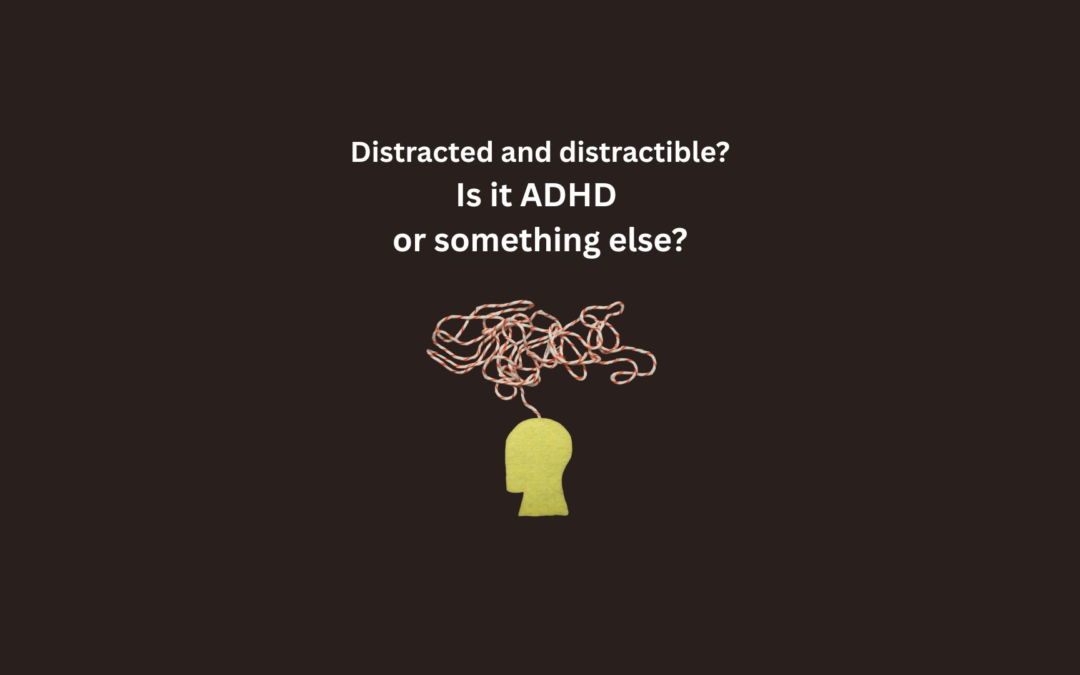
Is It ADHD… or Is Your Brain Just Stressed Out?
October is ADHD Awareness Month.
If you’ve found yourself saying, “I swear I have ADHD—I can’t focus, I start things and never finish, and I’m tired of my own inconsistency,” I want you to read this carefully.
Please note: This is for educational purposes only and should not replace the advice or guidance of a qualified medical professional.
ADHD is a topic of great interest to me both personally and professionally. As a Developmental Pediatrician in the UK, and then a neurofeedback therapist and brain health coach since moving to the USA, I have worked with hundreds of people with ADHD. I have also received a diagnosis myself as an adult. I come across many people who say, “I have ADHD,” or, “I have a touch of ADHD—don’t we all?”
The truth is that we don’t all have ADHD; it is a medical diagnosis falling into the category of “neurodevelopmental disorders” that should be made with great care by a medical professional, like a developmental pediatrician or psychiatrist.
I personally believe it is being over-diagnosed in the USA, especially because of a pressure for children and adults to conform to a rigid model of the world. Boys, especially, are often flagged by schools because they are fidgety, feisty, or bored by mundane lessons. Many adults suffering from distractibility, an inability to focus on tasks, or an overwhelming schedule seek a medical explanation for their symptoms. Much of what most people are calling ADHD today… isn’t ADHD at all.
Yes—ADHD is real. It has robbed millions of children and adults of years of productivity, confidence, and peace of mind. But here’s the problem no one is talking about: A stressed-out, inflamed, overstimulated brain can look exactly like ADHD—even when it isn’t.
We have a whole generation of adults self-diagnosing after scrolling mental health TikTok while quietly suffering from something else entirely: Frontal Lobe Dysfunction.
The Harsh Truth About Your “Focus Problem”
The frontal lobes sit above your eyes in the front of the skull, and they are the CEO of your brain, controlling things like:
- Follow-through on tasks
- Organization
- Impulse control
- Focus and time awareness
- Emotional regulation
- Motivation and drive
When this part of the brain is tired, under-fueled, inflamed, or overloaded by stress, functioning in this part of your brain slows; your brain stops functioning strategically and starts functioning reactively.
When your brain is reactive, you feel scattered, impulsive, emotional, and mentally disorganized—classic “ADHD symptoms,” right? No wonder people are confused.
Here’s What No One on Social Media Says Out Loud
- ADHD symptoms are usually present since childhood.
- Frontal lobe dysfunction is often acquired.
There’s a difference between “I’ve always been wired like this” and “I used to cope fine… until life steamrolled me, and now my brain feels hijacked.”
If your symptoms showed up after burnout, trauma, hormonal shifts, sleep disruption, or the pandemic—you might not have ADHD. You might have a brain health problem masquerading as ADHD.
Good News: Frontal Lobe Dysfunction Is Highly Responsive to Change
Unlike the genetic wiring of ADHD, frontal lobe dysfunction can be dramatically improved by:
- Reducing chronic stress load on the brain.
- Fixing sleep debt and inflammation.
- Stabilizing blood sugar and cortisol spikes.
- Using brain-based coaching to rebuild executive function.
- Training your nervous system to switch out of survival mode.
The business world tells us to “manage time.” The wellness world tells us to “breathe deeper.” Neither of those solve a dysregulated brain.
If you want to learn more about the symptoms of frontal lobe dysfunction, see the attached PDF. Please consider discussing your symptoms with your doctor. If you’d like to take a more in-depth assessment and book a complimentary Brain Health Discovery Call, please email coach@drleonaurarhodes.com.
My Mission for This Newsletter
I don’t coddle. I clarify.
There are enough fluffy “You’ve got this!” influencers and memes out there.
I am to teach you what your brain is actually doing, why it’s doing it, and how to change it.
So, if you’re ready for brain health without sugar-coating… you’re in the right place.
Next Step: Take Control of Your Brain Health
If this message hit a nerve — good. That means there’s still fire in you.
Make sure you stay on this list and connect with me on social media — I share straight-talk tools for adults wanting to reduce stress, improve focus, and uplevel their brain health and their lives.
To learn more about Frontal Lobe Dysfunction read this Amen Clinic article.
To Your Brain Health and Your Power,
Dr. Leonaura Rhodes
Chief Life Designer
P.S. This is the first time sending via a new email provider — please let me know if there are any problems.
Article Archive: https://www.drleonaurarhodes.com/articles/
https://www.linkedin.com/in/leonaurarhodes/
https://www.facebook.com/drleonaurarhodes
https://www.instagram.com/leonaurarhodes/
Youtube
https://www.youtube.com/channel/UC2IIJj_hnHZJO8BwcKPqInQ
TikTok
https://www.tiktok.com/@drleonaura
Check out my most recent articles:
| The Curse of Hypervigilance and Why It Leads To Burnout | |
| The Unspoken Epidemic: Why Successful Women Are Burning Out | |
| Creating a Joyful and Stress-Free Holiday Season | |
| Unlocking Growth: How an Annual Review Transforms Your Personal and Professional Success | |
| 5 Brain Health Myths Debunked |