
Stress has become the silent saboteur of modern life. It erodes your health, drains your energy, damages your relationships, and quietly destroys performance at work and in business. Yet most people are never taught how to understand the science behind it, let alone how to manage it effectively.
In this guide, adapted from my “Master Your Stress” webinar, you’ll learn what stress really is, why chronic stress is so harmful, and a practical 4-step framework to master your stress so you can protect your brain, your body and your long-term success.
Prefer video? Watch the recording of my recent webinar here.
What Is Stress, Really?
Scientifically, stress is a natural physiological and psychological response to a perceived threat. Your brain detects something as dangerous or demanding, and your nervous system reacts automatically. In small, short bursts, this response is necessary, appropriate and helpful: it sharpens focus, boosts energy, and gets you ready to respond to challenges.
But when the stress response is disproportionate, frequent, or never really turns off, it shifts from acute (brief, adaptive) stress to chronic (long-lasting, damaging) stress – and that is where the problems begin.
Overwhelm, Burnout and the Chronically Stressed Brain
Neurologically, a chronically stressed brain looks and behaves very differently from a calm, non-stressed brain. Under stress:
-
The “threat” systems of the brain are more active
-
Your thinking becomes reactive instead of strategic
-
Working memory shrinks, so it’s harder to focus, problem-solve or make good decisions
You feel it as brain fog, irritability, forgetfulness, difficulty concentrating, and feeling constantly “on edge.”
Many of my coaching clients begin their calls with words like “I am so overwhelmed”. It’s a common problem today. Overwhelm is triggered by feeling there is too much to do, not enough time, and no clear plan. Over time, this can progress into burnout.
Burnout is a term that is often overused. It is the severe end of the stress spectrum marked by physical, emotional, or mental exhaustion accompanied by decreased motivation, lowered performance, and more negative attitudes toward yourself and others. It often arises from extreme and prolonged stress, heavy workloads, relentless pressure, and a lack of recovery time. It can be seen in employees, entrepreneurs, parents and carers.
Read my article “The Unspoken Epidemic: Why Successful Women Are Burning Out” to learn about how stress affects successful women in particular.
Why Chronic Stress Is So Harmful?
Chronic stress is not just “in your head” – it has a profound impact on your entire body.
Physical impacts of chronic stress
Long-term stress can contribute to:
-
Increased heart rate and blood pressure, putting strain on the cardiovascular system
-
Fast, shallow breathing
-
Muscle tension, aches, pains and increased risk of injury
-
Increased inflammation throughout the body
-
Slowed digestion and gut issues
-
Suppressed immune function
-
Metabolic changes and blood sugar dysregulation
-
Hormone imbalances and reproductive health problems
-
Skin conditions and poor wound healing
-
Sleep disruption and chronic fatigue
Over months and years, chronic stress is linked with higher risks of heart attack, stroke, cancer, diabetes, Alzheimer’s disease and immune-related conditions, as well as weight gain (especially around the abdomen) and faster biological ageing.
Mental health and performance
Chronic stress increases the risk of anxiety, depression and other mental health challenges. It reduces your ability to concentrate, think clearly and perform at your best in every area of life. Your quality of life drops – even if, from the outside, you still look “successful.”
The Ripple Effect: Stress, Relationships and Communication
Chronic stress doesn’t stay neatly contained inside your head. It spills over into every interaction and relationship.
Under stress, people typically experience:
-
Reduced empathy for themselves and others
-
Impaired listening skills and decreased patience
-
Increased reactivity and conflict
-
Difficulty articulating thoughts due to brain fog
-
Withdrawal from social interactions
-
Heightened sensitivity to criticism
-
Impulsive responses and misinterpretation of social cues
-
A sense of negative energy that others can feel
This ripple effect impacts teams at work, families at home, and every close relationship. When stress becomes the “new normal,” communication deteriorates and trust erodes.
Why Chronic Stress Is a Business Risk – Not Just a Personal Problem
For organizations, chronic stress is not just a wellbeing issue – it is a performance and financial issue. The harsh truth is that chronically stressed employees are underperforming and costing your business money.
Globally, stress-related mental health problems contribute to billions in lost productivity, sick days, errors and turnover. High-stress companies spend significantly more per 1,000 employees than low-stress organizations, once you factor in absenteeism, healthcare costs, mistakes and recruitment.
In businesses, chronic stress shows up as:
-
Productivity drops: not from laziness, but from cognitive overload and reduced working memory
-
More mistakes: stressed brains make poorer decisions and more costly errors
-
More sick days: stress increases susceptibility to illness and burnout
-
Lower engagement: people “check out,” especially high performers who often hide their stress until they crash
High performers frequently mask their stress until they can take no more. Consequently, it appears as sudden illness, extended absence or unexpected resignation. Leaders who don’t understand stress miss the early warning signs.
Hidden costs of stress in business
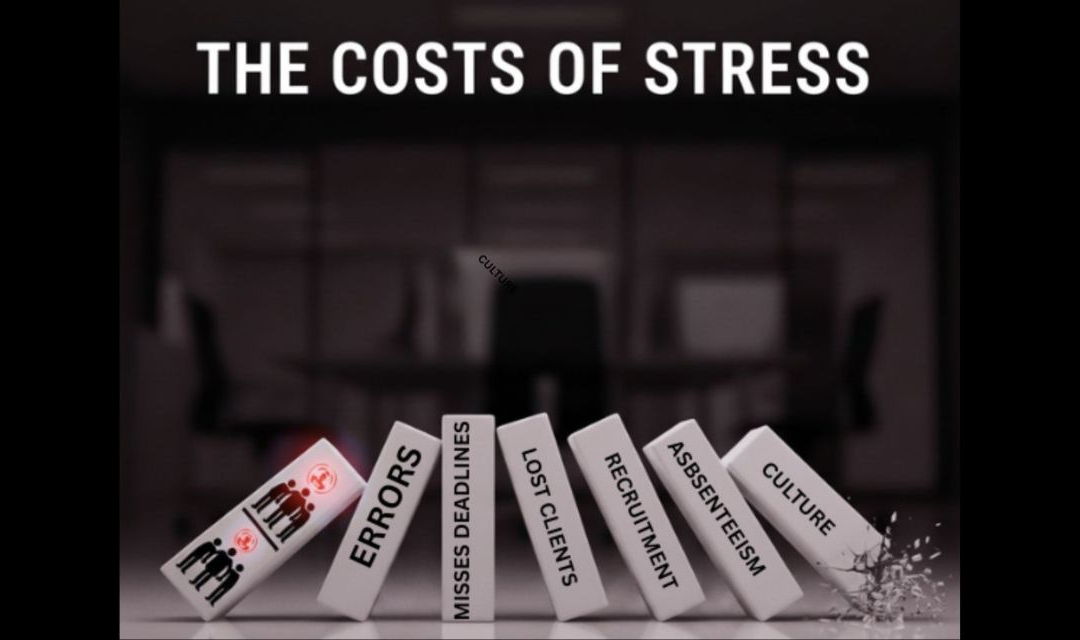
Stress quietly erodes the business in five key ways:
-
Absenteeism – high-stress employees take many more sick days and file more claims
-
Presenteeism – they are physically present but mentally and emotionally absent
-
Turnover – replacing an employee can cost 1.5–2 times their annual salary
-
Errors and risk – stressed employees are significantly more likely to make critical mistakes
-
Culture – chronic stress undermines trust, creativity and psychological safety
If stress showed up as a clear line on the P&L, most leadership teams would be demanding action.
The Real Causes: It’s Not Just “Individuals Who Can’t Cope”
One of the biggest misconceptions about stress is that it’s purely an individual resilience issue. In reality, it is often an organizational design issue.
Some common stress drivers in businesses include:
-
Unrelenting pace: always on, constant fire-fighting, no buffer time
-
Ambiguous priorities: when everything is “urgent,” nothing is truly prioritized
-
Lack of autonomy: micromanagement and low agency
-
No recognition: people feel invisible and undervalued
-
Culture of silence: people don’t feel safe speaking up about workload or stress
-
No recovery: back-to-back meetings, no time to think, reflect or recharge
You can’t fix systemic stress with a meditation app. Tools like breathwork and mindfulness are powerful, but they don’t compensate for unrealistic workloads, unclear priorities or toxic leadership.
The 4-Step ‘Master Your Stress’ Framework
To master your stress, you need an approach that works both before stress hits and in the moment. In the webinar, I teach a 4-step framework that combines prevention and management:
-
Brain health (prevention)
-
Reducing stress triggers (prevention)
-
Self-awareness (management)
-
Your personal stress toolkit (management)
Measuring and Managing Stress in Organizations
If you’re a leader or HR professional, one of the most powerful things you can do is make stress visible instead of treating it as a personal failing.
Some practical starting points:
-
Run stress-specific pulse surveys that ask directly about overload, sleep and recovery
-
Cross-reference survey data with absenteeism, turnover and error rates
-
Use qualitative listening: 1:1s, team check-ins, and noticing “distress signals” like late-night emails
-
Conduct a stress audit: map demands vs resources to see where the system is misaligned
From there, you can work at three levels:
-
Leadership level: set real priorities, stop rewarding heroic overwork, model rest and recovery, embed stress checks into reviews
-
Team level: end meetings 10 minutes early, protect no-meeting focus blocks, make it safe to flag overload, “swap” tasks instead of just adding more
-
Individual level: teach practical tools like breathing, focus rituals and recovery habits – and ensure the culture doesn’t punish people for using them
The goal is to create environments where people can sustain results, not just drive them until they burn out.
From Awareness to Action: Reducing Stress in Business
Understanding stress is important – but transformation comes from taking action.
You might start by asking yourself:
-
What has been my highest stress level in the last week, on a 0–10 scale?
-
How does stress affect my body, my thinking, my relationships and my work?
-
How good am I at managing my stress right now, on a 0–10 scale?
-
Which two or three small changes could have the biggest impact on my brain health, stress triggers, or daily routines?
Then, choose one improvement for each of the four steps: one brain-health habit, one trigger you’ll address, one way to monitor your stress levels, and one new tool for your stress toolkit. Implement them consistently for a few weeks and notice what shifts.
Want Help Mastering Your Stress?
If you’re ready to move beyond firefighting and build sustainable stress resilience for yourself or your team, you don’t have to do it alone.
My Beyond Stress 4 Week Bootcamp, is a deeper dive into this framework step-by-step and help you build a personalized plan for your brain, your body and your work. Learn more at: https://peaklifedesign.systeme.io/beyond-stress-course
Related Reading
The Curse of Hypervigilance and Why It Leads To Burnout
The Unspoken Epidemic: Why Successful Women Are Burning Out
Q&A
1. Why is stress a serious risk for US businesses?
Stress is a major business risk in the US because it drives lower productivity, more errors, higher healthcare spending, increased sick days and higher turnover. Estimates suggest workplace stress costs the US economy more than 300–500 billion dollars a year once you factor in absenteeism, presenteeism, medical costs and lost productivity.
2. How much does workplace stress and poor mental health cost the US economy and employers?
Poor mental health and stress-related absence are estimated to cost the US tens of billions of dollars every year in lost productivity alone. Some analyses put the broader impact of workplace stress, including healthcare, absenteeism, turnover and reduced performance, at more than 300 billion dollars a year for US employers.
3. What are the main ways stress quietly costs a US company money?
Stress creates visible costs such as increased medical claims, higher health insurance premiums, disability claims and sick leave. It also leads to hidden costs like presenteeism (people at work but not fully productive), errors, rework, lost customers and higher turnover, which together can drain profitability far more than absenteeism alone.
4. How does chronic stress affect employee performance and productivity?
Chronic stress impairs focus, memory, decision-making and creativity, so American workers under stress take longer to complete tasks and often produce lower-quality work. US data on poor mental health show these employees have significantly more unplanned absences and much higher rates of low productivity days than colleagues with good mental health.
5. What are the common organisational causes of stress in US workplaces?
Many drivers of stress in US companies are structural: long hours, high workloads, job insecurity, lack of control or autonomy, poor management practices and cultures that reward overwork. Research has linked these workplace factors to higher healthcare spending and even increased mortality, underscoring that stress is not just about individual resilience but about how work is designed and led.
6. What is presenteeism and why should US leaders care about it?
Presenteeism happens when employees show up to work while highly stressed, unwell or mentally depleted, and therefore operate far below their potential. In the US, absenteeism is estimated to cost employers around 150 billion dollars a year, but presenteeism may cost up to 1.5 trillion dollars annually, making it up to 10 times more expensive than people staying home sick.
7. How can US organisations start to measure and reduce stress?
US organisations can begin by tracking stress and mental health through regular surveys, monitoring unplanned absences and healthcare usage, and asking directly about workload, burnout and recovery in manager check-ins. From there, leaders can redesign roles and expectations, adjust workloads, increase flexibility and invest in evidence-based mental health and stress management support, which reduces costly absenteeism, presenteeism and turnover over time.
To Your Brain Health and Your Power,
Dr. Leonaura Rhodes
Chief Life Designer
P.S. This is the first time sending via a new email provider — please let me know if there are any problems.
Article Archive: https://www.drleonaurarhodes.com/articles/
https://www.linkedin.com/in/leonaurarhodes/
https://www.facebook.com/drleonaurarhodes
https://www.instagram.com/leonaurarhodes/
Youtube
https://www.youtube.com/channel/UC2IIJj_hnHZJO8BwcKPqInQ
TikTok
https://www.tiktok.com/@drleonaura